What to Wear for Your Engagement Session (A Connecticut Photographer’s Real Guide)
If you’ve been searching for what to wear for engagement photos and ended up with seventeen browser tabs and a mild panic spiral — this is the guide that closes all of them. As a Connecticut engagement photographer, I’ve watched hundreds of couples overthink this exact decision. Here’s what actually matters, and what doesn’t.
She’d spent two weeks scrolling Pinterest, saved 47 outfit pins, and was still texting me at 11pm the night before her session asking if her jeans were wrong. They weren’t. They were perfect.
Outfit anxiety is one of the most common things I hear before a session — and I completely understand it. You want the photos to feel like you. You want to look back at them in ten years and not cringe. You want your partner to look like they belong in the same frame as you without looking like you’re wearing a coordinated couple costume.
Here’s the real guide — what actually works, what consistently doesn’t, and how to dress for the specific session you’re having rather than a generic park photo you found online.
The One Rule That Solves Almost Everything
When couples ask what to wear for engagement photos, I give them one rule first: dress like you’re going somewhere you’d actually want to go together. A nice dinner. A gallery opening. Your favorite date-night spot.
That framing does something important — it takes the decision out of “photo mode” and puts it back into your real life. You already know what looks good on you in that context. You already know what makes you feel confident and like yourself. That’s exactly the energy that shows up in the photos.
The goal isn’t to look like you dressed up for photos. The goal is to look like the most elevated version of how you actually dress every day.
When you reach for something that feels costumey — overly formal, out of character, or chosen specifically “for photos” — it reads on camera. Not because the outfit is wrong, but because you’re not quite yourself in it.
Why Texture Matters More Than Color
Most outfit guides lead with color. I’m going to lead with texture — because it’s the thing that actually makes images feel rich, dimensional, and cinematic rather than flat.
Linen, knit, denim, velvet, suede, worn leather, flowing chiffon — all of these photograph beautifully. They catch light. They have depth. They give the image something to live in. Smooth, synthetic fabrics — particularly polyester and anything with a sheen — tend to flatten out and can look cheap even when the garment isn’t.
Run your hand over what you’re planning to wear. If it has texture you can feel, it will have texture the camera can see.
For color: neutrals, earth tones, and deep rich hues all perform beautifully. Soft creams, warm tans, sage greens, rust, burgundy, navy — these feel timeless on camera. Neon and overly bright colors can overwhelm the image and compete with the environment.
That said — if color is part of your personality, don’t strip it out entirely. A bold lip, a jewel-toned blazer, a printed scarf used as an accent — these can work. Just make sure the color is a detail, not the whole story.
How to Coordinate Without Matching
Matching outfits — where both partners are wearing the same color in the same shade — almost always reads as intentional in a way that feels a bit stiff. The goal isn’t to match. The goal is to belong in the same frame.
Think palette, not uniform. If one of you is wearing warm neutrals, the other should be somewhere in that family — not identical, but complementary. If one person is in a rich jewel tone, the other can anchor in a deep neutral that doesn’t compete. The images feel cohesive without looking like you coordinated outfits in advance (even if you did).
A simple test: hold your two outfits next to each other. Do they feel like they belong in the same room? You don’t have to love them together — they just shouldn’t clash.
One more thing on this: if you’re planning two outfit changes for the session, think of them as two different chapters of the same story. A casual, relaxed first look and a slightly more elevated second. The contrast makes both feel more intentional.
What to Skip — and Why
A few things that consistently cause problems on camera:
- Busy prints and bold graphics. The camera’s eye gets pulled to pattern before it gets to faces. A subtle print or small texture is fine — a large, high-contrast print competes with everything else in the frame.
- Matchy-matchy couples looks. Same color, same wash of denim, same white linen set — it almost always reads as staged. Coordinate, don’t clone.
- Anything that doesn’t fit properly. A beautiful garment in the wrong size is the fastest way to feel uncomfortable on camera. If something is pulling, gaping, or needs constant adjusting, leave it at home.
- Overly trendy pieces. Trends date images fast. The very specific fashion moment of right now will be obvious in five years. Reach for classics with a personal edge over pure trend.
- Shoes you can’t walk in. For outdoor sessions especially — if you can’t actually move comfortably, it shows in every frame. Bring the heels if you want them, but have a backup.
Skip It
Apple watches, fitness trackers, and anything bulky on your wrist. They date images instantly and almost always get removed in editing requests anyway.
Dress for Your Session’s Specific Vibe
This is where generic outfit guides fall short — they treat every engagement session like the same thing. A golden hour field session and a moody downtown portrait session are not the same thing, and they shouldn’t be dressed the same way.
Every cinematic session I design has its own specific aesthetic built around each couple. Part of that aesthetic is wardrobe. Here’s how I think about it by session type:
Golden Hour · Outdoor · Warm
Natural & Sun-Drenched
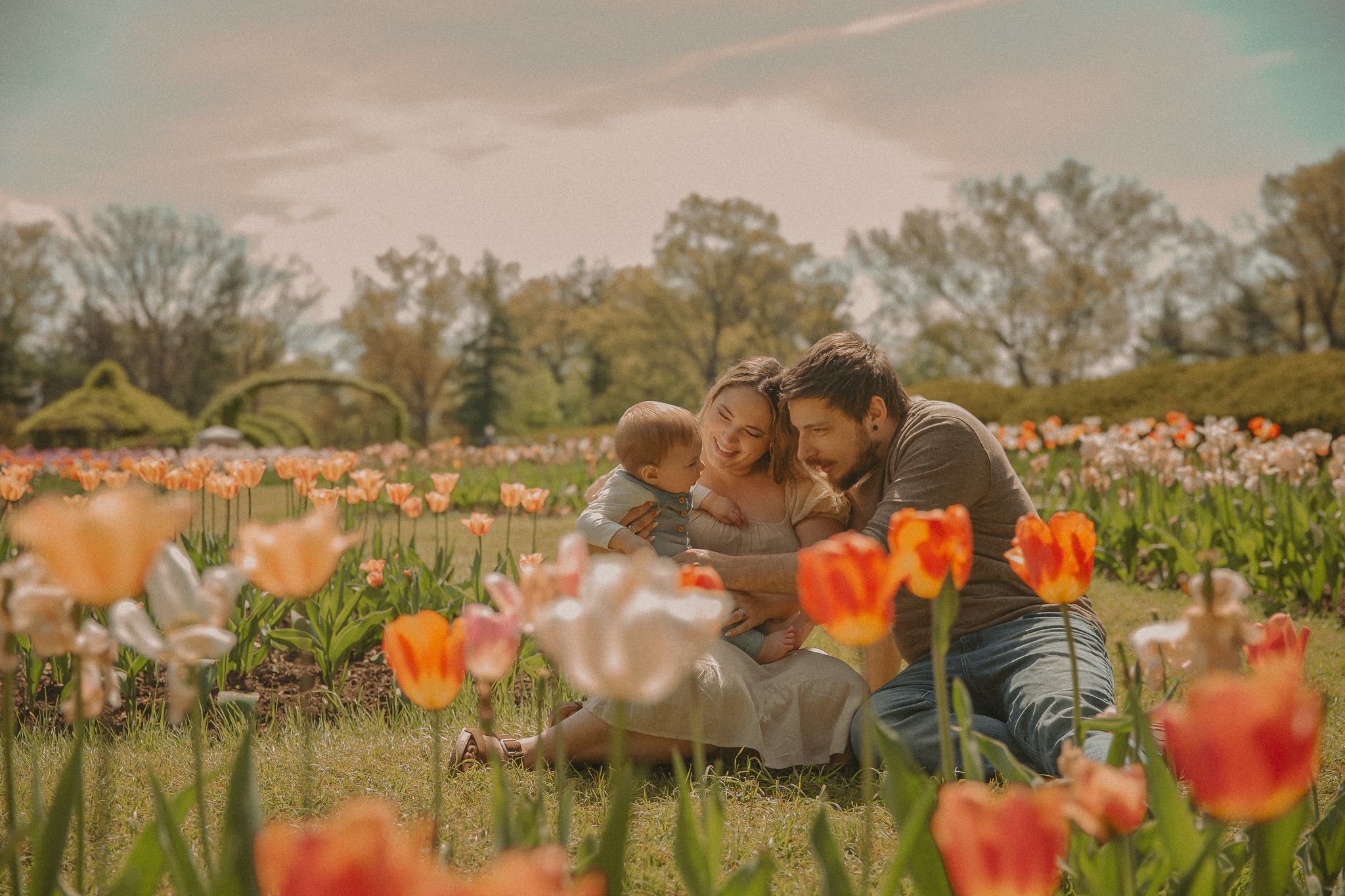
Linen, flowing fabrics, soft neutrals and warm tones. Think: the kind of outfit you’d wear for a late-afternoon picnic somewhere beautiful. Movement helps — skirts, open layers, anything that catches the light.
Moody · Downtown · Cinematic
Editorial & Rich
Deeper tones, structured pieces, texture-forward. Think: a great blazer, a silk slip dress, dark denim with something elevated on top. The city backdrop wants something with presence — don’t go too soft or washed out.
In-Home · Intimate · Documentary
Real & Lived-In
Your actual, beautiful everyday. A worn-in knit, your favorite jeans, a slip dress you actually sleep in. Nothing should look like it was purchased for this. The magic of an in-home session is that it looks exactly like your life — just seen properly.
Adventure · Travel · Dramatic
Elevated & Movement-Ready
Flowing maxi dresses, structured coats, pieces that move with you rather than against you. Practical footwear matters here — beautiful but actually walkable. Layers help when the environment and light are going to change throughout the session.
What Happens When You Book With Me
Every client I work with receives a full wardrobe style guide built specifically for their session — not a generic PDF, but a curated set of inspo boards tailored to the exact aesthetic we’ve designed together.
By the time we’ve had our discovery call, I know your vibe, your session’s concept, the locations we’re using, and the light we’re working with. The style guide takes all of that context and translates it into concrete outfit direction: specific color palettes, texture recommendations, what to avoid for your specific shoot, and visual references so you can shop with intention rather than guessing.
You don’t have to figure this out alone. That’s part of what you’re booking when you book a cinematic session — a collaborative process where everything, including how you look, is considered in advance.
The wardrobe conversation happens before anything else. Because the right outfit isn’t just about looking good — it’s about feeling like yourself, so the camera can see who you actually are.
The sessions I love most are the ones where couples show up having thought about what they’re wearing without having stressed about it — because they had a plan, not a panic. That’s what all of this is for.
If you’re still deciding between two options the morning of: wear the one that feels most like you. Every time.
Ready to Start
Let’s build your session — and your style guide — together.
Book Your Free Discovery CallYou May Also Like